The two observations demonstrated how communication between the student and ChatGPT developed through continuous exchanges. Rather than ending after the initial request, both interactions involved multiple rounds of generation, evaluation, and revision. The student's repeated consultations with ChatGPT illustrate how feedback and responses shaped the progression of each interaction.
Biology reviewer
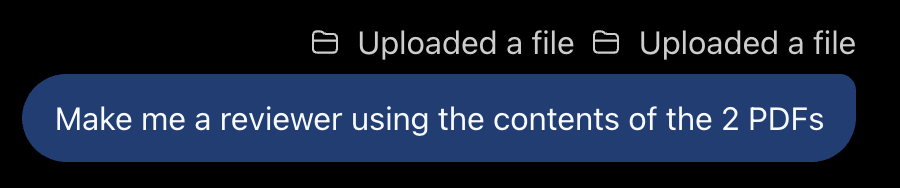
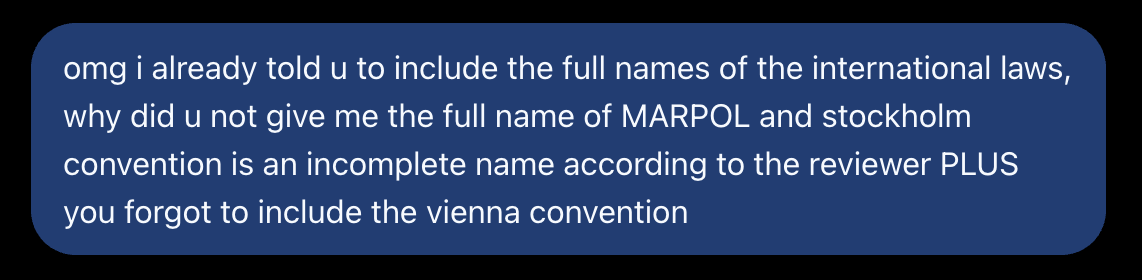
In the first observation, which involved creating a Biology reviewer, sentiment analysis scores varied considerably for the student's initial message. The message received a score of -100 using Soper, 0 using VADER, and 0.09333445877 using CardiffNLP. These differing results suggest that the tools did not interpret the message in the same way, which may be attributed to its nature as a request rather than an explicit expression of emotion. However, the student's emotional response became clearer when ChatGPT failed to meet the stated requirements. For example, the message, "omg i already told u to include the full names...", received a CardiffNLP sentiment score of -0.8577050148, indicating a negative emotional response to the incomplete output. This instance demonstrates how the context of an interaction can provide a clearer basis for interpreting emotional semantics.
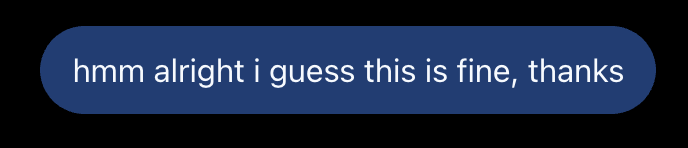
Following ChatGPT's correction of the Biology reviewer, the student's tone became more accepting. The response, "hmm alright i guess this is fine, thanks", received a Soper score of 100, a VADER score of 0.6908, and a CardiffNLP score of 0.7142516831. All three tools indicated a positive sentiment, showing general agreement in interpreting the message as an expression of approval and gratitude. However, the phrase "I guess" suggests some hesitation, indicating that the student may have accepted the output without being entirely satisfied. This shift from frustration to approval was associated with the improved quality of ChatGPT's response, while the student's wording retained some indication of reservation.
Drafting an email
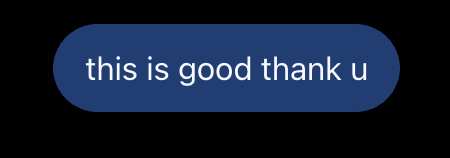
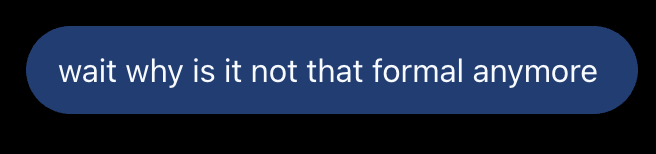
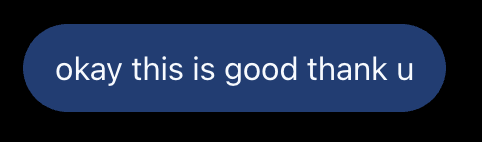
The second observation, which involved drafting an email, demonstrated a similar pattern. Throughout the interaction, ChatGPT's messages consistently received positive sentiment scores across the three sentiment analysis tools, reflecting a generally positive tone in its responses. After receiving the initial draft, the student responded, "this is good thank u", which received positive sentiment scores of 0.6597 using VADER and 0.9753 using CardiffNLP. However, upon realizing that the draft did not meet the desired level of formality, the student stated, "wait why is it not that formal anymore." This message received a CardiffNLP score of -0.4388 and a Soper score of -100. Although the scores indicated negative sentiment, the message can be interpreted in context as an expression of dissatisfaction with the output rather than hostility toward ChatGPT. After receiving a revised response, the student expressed approval, with all three sentiment analysis tools indicating positive sentiment. Similar to the first observation, the student's emotional language shifted alongside the quality and appropriateness of ChatGPT's responses, while ChatGPT's consistently positive sentiment scores contrasted with the student's more variable emotional responses.
Multiple verbal cues were noticed during the observations.
Through semantics,
we were able to analyze how the different contexts and emotions were transmitted to the AI via the text. For example, “omg i already told u to include the full names...” expressed frustration, while “this is good thank u” conveyed approval and gratitude. The meaning of these expressions varied depending on the student's reaction to ChatGPT's responses.
Through syntactics:
The student's use of sentence structure, punctuation, capitalization, and informal expressions reflected the conversational nature of the interaction. Examples such as “omg,” “u,” and “thank u” show how the student used shortened and informal forms to communicate quickly and naturally with ChatGPT. The use of repeated punctuation and lowercase writing also contributed to the tone of certain messages.
Lastly, pragmatics
The context of the interaction influenced how the student's statements were understood. For example, “wait why is it not that formal anymore” functioned not only as a question but also as an expression of dissatisfaction with the email's level of formality. This shows that the intended meaning of an utterance cannot always be understood from its literal words alone, but also depends on the situation and the student's purpose in communicating.
The observations also indicated a developing reliance on ChatGPT for academic assistance. In both tasks, the student continued using the system beyond the initial request by asking for revisions, corrections, and additional content. This repeated consultation suggests that ChatGPT had become an integrated part of the student's workflow, serving not only as a tool for generating initial content but also as a resource for refining and improving academic outputs.
Despite this reliance, the student did not passively accept the information generated by ChatGPT. In the biology reviewer task, the student noticed missing information and requested its inclusion. Similarly, in the email task, the student identified the lack of formality and asked for appropriate revisions. These instances demonstrate that the student continued to exercise judgment over ChatGPT's responses. Although the student relied on the system for assistance and modifications, they remained actively involved in evaluating the generated content and directing the interaction toward the intended outcome.
Overall, the two observations demonstrate the relationship between emotional semantics, feedback, and reliance on ChatGPT during academic tasks. The student's emotional responses varied according to the quality and appropriateness of the generated outputs, with dissatisfaction prompting corrections and improved responses generally resulting in greater approval. At the same time, repeated consultations suggest that ChatGPT became an increasingly integrated part of the student's workflow. However, this reliance did not eliminate the student's active role in communication, as the student continued to evaluate, correct, and direct the system. The observations highlight how communication with AI is shaped not only by the messages exchanged but also by task expectations, feedback, and the user's interpretation of the generated responses.